
"-90 degrees"
40000 article(s) found

How to judge whether the degree of grinding of your chosen coffee is appropriate? How to adjust the grinding degree of hand-brewed coffee powder
I don't think I'm making this cup of coffee right? What is the degree of grinding you use? The size of fine sugar, do you really know the degree of grinding? Everyone's degree of coffee grinding is different. After all, it is a millimeter-level micro-world, so it is difficult for us to accurately grasp the appropriate size of coffee grinding particles.

Coffee roasting basic coffee roasting degree resolution chart
American Coffee Association (SCAA) roasting standard this standard uses infrared caramelization tester technology (Agtron) to measure the color of coffee beans to determine the roasting degree of coffee, and the color is divided into eight equal parts into eight standard color blocks for coffee industry as roasting identification. The above colors are for reference only according to the baking degree preferred by each country. This is also coffee roasting.

Definition of roasting degree and taste of roasted coffee
In the United States, the baking degree has long been defined by Cinnamon (shallow roasting), City (shallow roasting), Fully City (deep roasting) and Dark roast (heavy deep roasting, including Italian and French). However, the American preference for coffee flavor has always been strong in the west and light in the east, so the shallow roasting on the west coast may be as deep as that on the east coast, and vice versa.

Definition of basic roasting degree and taste of boutique coffee
In the United States, the baking degree has long been defined by Cinnamon (shallow roasting), City (shallow roasting), Fully City (deep roasting) and Dark roast (heavy deep roasting, including Italian and French). However, the American preference for coffee flavor has always been strong in the west and light in the east, so the shallow roasting on the west coast may be as deep as that on the east coast, and vice versa.

Coffee roasting general knowledge coffee roasting degree resolution chart
American Coffee Association (SCAA) roasting standard this standard uses infrared caramelization tester technology (Agtron) to measure the color of coffee beans to determine the roasting degree of coffee, and the color is divided into eight equal parts into eight standard color blocks for coffee industry as roasting identification. The above colors are for reference only according to the roasting degree preferred by each country. This is also coffee roasting.
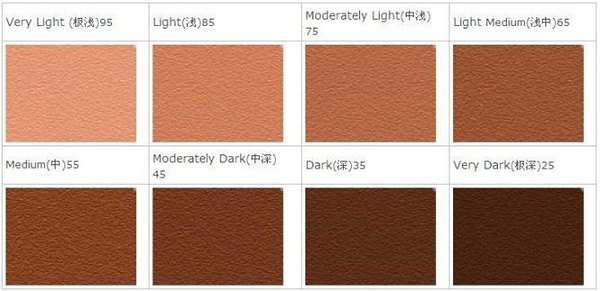
Key points of coffee roasting techniques: coffee roasting degree resolution chart can easily analyze the roasting principle.
American Coffee Association (SCAA) roasting standard this standard uses infrared caramelization tester technology (Agtron) to measure the color of coffee beans to determine the roasting degree of coffee, and the color is divided into eight equal parts into eight standard color blocks for coffee industry as roasting identification. The above colors are for reference only according to the baking degree preferred by each country. This is also coffee roasting.

3 Ways to Control Roast Degree-Getting good coffee beans is no longer difficult.
First, the visual, sound, smell changes to control the degree of baking human five senses is the most widely used and is the best judgment tool to control the degree of baking by perception. Just like when you watch a movie and think it's over, you know it naturally. Roast coffee beans are like this. You feel that its smell, color and sound have reached a certain level and you know it's what you want. II. To

The standard of roasting degree of fine coffee by the American Coffee Association (SCAA)
American Coffee Association (SCAA) roasting standard this standard uses infrared caramelization tester technology (Agtron) to measure the color of coffee beans to determine the roasting degree of coffee, and the color is divided into eight equal parts into eight standard color blocks for coffee industry as roasting identification. According to the roasting degree preferred by various countries, this is also the earliest distinction of coffee roasting degree, because

Effect of different roasting degree on coffee flavor
In the career planning of baristas, with the increasing popularity of boutique coffee in recent years, coffee roasting has become one of the hot learning programs, and new occupations related to it have become more and more mature. Roasters, cup testers, and baristas seem to be three independent occupations. but they have something in common. In addition to the inherent quality of raw beans, the taste of coffee mostly depends on roasting. Incorrect

Coffee bean roasting knowledge definition of various roasting degrees and taste problems
In the United States, the baking degree has long been defined by Cinnamon (shallow roasting), City (shallow roasting), Fully City (deep roasting) and Dark roast (heavy deep roasting, including Italian and French). However, the American preference for coffee flavor has always been strong in the west and light in the east, so the shallow roasting on the west coast may be as deep as that on the east coast, and vice versa.

Definition of various roasting degrees and common sense of taste of coffee
In the United States, the baking degree has long been defined by Cinnamon (shallow roasting), City (shallow roasting), Fully City (deep roasting) and Dark roast (heavy deep roasting, including Italian and French). However, the American preference for coffee flavor has always been strong in the west and light in the east, so the shallow roasting on the west coast may be as deep as that on the east coast, and vice versa.

How much is the appropriate thickness adjustment of the bean grinder-coffee grinder scale adjustment
How much is the appropriate thickness adjustment of the grinder-coffee grinder scale adjustment humidity factor is not only sunny and rainy days play a role, but also different times of the day to consider this factor. Generally speaking, the humidity in the morning and evening will be higher than noon, so according to the influence of humidity factors, the grinding degree should be adjusted coarsely in the morning and evening, and it should be adjusted finely at noon. Factors affecting abrasiveness

Talking about the definition of all kinds of baking degree and taste
In the United States, the baking degree has long been defined by Cinnamon (shallow roasting), City (shallow roasting), Fully City (deep roasting) and Dark roast (heavy deep roasting, including Italian and French). However, the American preference for coffee flavor has always been strong in the west and light in the east, so the shallow roasting on the west coast may be as deep as that on the east coast, and vice versa.

The significance and differences of different baking degrees the characteristics of shallow baking, medium baking and deep baking
Light roasted coffee is light brown, the surface does not have luster or grease, and the baking time is not long enough to develop more substances. The roasted beans have some smooth and dark lines on the surface and are roasted to the point in the early stage of the explosion. The name comes from the popping sound of coffee beans when baked to about 205 degrees Celsius. When the temperature rises, the beans will expand, and the temperature will also make the beans.
Baking degree resolution diagram
American Coffee Association (SCAA) roasting standard this standard uses infrared caramelization tester technology (Agtron) to measure the color of coffee beans to determine the roasting degree of coffee, and the color is divided into eight equal parts into eight standard color blocks for coffee industry as roasting identification.

The most direct factor determining whether coffee beans are sour or bitter is the roasting of coffee beans.
The raw coffee beans are roasted to make the coffee show a unique coffee color, aroma and taste. The most important thing about baking is to be able to stir-fry the inside and outside of the beans evenly without overscorching. It is no exaggeration to say that 80% of the taste of coffee depends on roasting, which is the most important and basic condition for making coffee. Roasting is a deep knowledge. Many coffee roasters study coffee roasting all their lives, but
Common sense of Coffee talking about the definition of various roasting degrees and Taste
In the United States, the baking degree has long been defined by Cinnamon (shallow roasting), City (shallow roasting), Fully City (deep roasting) and Dark roast (heavy deep roasting, including Italian and French). However, the American preference for coffee flavor has always been strong in the west and light in the east, so the shallow roasting on the west coast may be as deep as that on the east coast, and vice versa.
Coffee roasting knowledge: coffee roasting degree resolution chart
American Coffee Association (SCAA) roasting standard this standard uses infrared caramelization tester technology (Agtron) to measure the color of coffee beans to determine the roasting degree of coffee, and the color is divided into eight equal parts into eight standard color blocks for coffee industry as roasting identification. The above colors are for reference only according to the roasting degree preferred by each country. This is also coffee roasting.

How to grind coffee correctly? The degree of grinding of coffee is judged by the following four points
Before making coffee, we need to grind the beans into fine particles to release the charming aroma and taste of coffee. Therefore, it is particularly important to choose the right degree of coffee grinding and grinding. How should we choose the coffee mill, and how should we set it? To this end, we can judge the degree of grinding of coffee by the following four points. 1. Extraction degree and grinding process of coffee
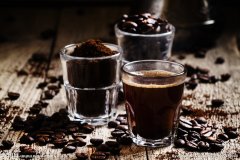
Baking technology paste: raw vs cooked spelling
Communication of professional baristas Please follow the Coffee Workshop (official Wechat account cafe_style) Preface: recently, when some new customers talked to me about the beans they used in their stores, they always mentioned that the beans were unstable, sometimes sour, sometimes bitter, and I don't know why. Later, I asked him to ask the baker about the formula of the beans used in his store, how to bake them, and how much they were baked.